
Leave us a message and we will get back to you soon
The Delhi Government is actively promoting rooftop solar adoption to reduce electricity costs, improve energy security, and support the city’s clean energy goals. Notified in March 2024, the Delhi Solar Energy Policy 2023 aims to increase Delhi’s installed rooftop solar capacity to 750 MW while accessing around 3,750 MW of utility-scale solar power from outside the state.
The policy complements the Central Government’s PM Surya Ghar: Muft Bijli Yojana by offering additional financial incentives to residential consumers.
The Delhi Government and the Central Government provide financial assistance to make on-grid rooftop solar systems more affordable for homeowners. Eligible residential consumers can receive up to ₹78,000 under the PM Surya Ghar: Muft Bijli Yojana, along with the Delhi Government’s state subsidy and Generation-Based Incentives (GBI), subject to the applicable policy guidelines.
These incentives significantly reduce the upfront installation cost and improve the return on investment. Delhi is also witnessing growing rooftop solar adoption, with over 10,000 rooftop solar connections already energised. It is creating around 220 MWp of clean energy capacity and helping consumers collectively save nearly ₹160 crore annually on electricity bills.
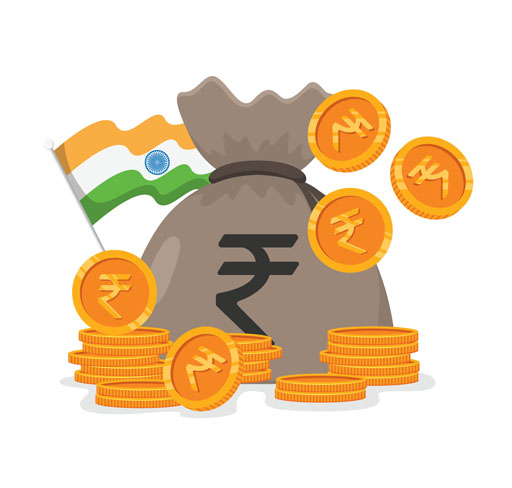

Both the Central Government of India and the State Government provide solar subsidies in Delhi to reduce the cost of installation. Below you can get the amount of solar subsidy available for Delhi residents:
| Solar Subsidy/Policy | Details |
| Central Financial Assistance (CFA) under PM Surya Ghar Scheme | ₹30,000 for 1kW ( for household) |
| ₹60,000 for 2kW ( for household) | |
| ₹78,000 for 3kW or above (for household) | |
| ₹18,000 per kW for common facilities (for group housing society / resident welfare association) | |
| State Solar Subsidy | ₹10,000 per kW (max ₹30,000 per consumer) |
| State-Given Generation-Based Incentive (GBI) | Residential: ₹3/kWh (up to 3 kW), ₹2/kWh (3-10 kW) |
| GHS/RWA: ₹2/kWh (up to 500 kW) | |
| Commercial/Industrial: ₹1/kWh (first 200 MW) |
Note: The subsidy in Delhi may change every year depending on government notifications
To be eligible for the Delhi solar subsidy, you must:
You must be an Indian resident to apply for the solar subsidy.
If you have already received a solar subsidy for the same electricity connection, you are not eligible.
You must own a home with a suitable rooftop for solar panel installation.
You must have an active electricity connection and a meter registered in your name.
The system should use DCR solar modules included in the ALMM (Approved List of Models and Manufacturers), wherever applicable under the scheme.
The rooftop solar system must be installed in accordance with the latest MNRE guidelines.
Only the DISCOMs from Delhi are authorised under the PM Surya Ghar Scheme to provide you with subsidies worth up to ₹78,000. Below is a list of these Delhi-based DISCOMs:
Install your rooftop solar system according to the MNRE standards and Delhi Government guidelines by hiring our vetted solar vendor. Our experienced and trained installers take all the necessary measures to help you get the solar subsidy.
As instructed by the MNRE, you must install a solar plant only through an empanelled solar installer registered with the DISCOM serving your area in Delhi.
To be eligible for the subsidy under the PM Surya Ghar Scheme, your solar installer must be empanelled with the relevant Delhi DISCOM. Depending on your location, this may include BSES Rajdhani Power Limited (BRPL), BSES Yamuna Power Limited (BYPL), or Tata Power Delhi Distribution Limited (TPDDL).
Your empanelled solar installer will provide all the required documents, complete the necessary installation formalities, and assist you with the inspection and net metering process. Once the installation is approved and the required documents are submitted through the national rooftop solar portal, the subsidy amount will be credited directly to your bank account.
Install your rooftop solar system in compliance with MNRE guidelines and Delhi DISCOM regulations by choosing an empanelled solar installer. Our experienced installers, empanelled with Delhi DISCOMs, ensure your solar installation meets all the required standards and guide you through the subsidy application process under the PM Surya Ghar Scheme.
Residential consumers in Delhi who wish to avail the solar subsidy should follow these steps:
If you have already set your mind to install a solar system with the subsidy, proceed to apply for rooftop solar on the official portal now!
To complete your subsidy application successfully, you need to submit a few essential documents. Here is a list of all the necessary documents:
Note: If any additional documents are required, you have to submit them to the relevant authority.
The table below provides estimated market prices for residential rooftop solar systems in Delhi in 2026:
| Rooftop Solar Capacity | Estimated Installation Cost (Without Subsidy) | Central Subsidy | Delhi State Subsidy | Total Subsidy | Estimated Installation Cost (After Subsidy) |
| 1 kW | ₹90,000 – 1,30,000 | ₹30,000 | ₹10,000 | ₹40,000 | ₹50,000 – ₹90,000 |
| 2 kW | ₹1,95,000 | ₹60,000 | ₹20,000 | ₹80,000 | ₹1,15,000 |
| 3 kW | ₹2,25,000 | ₹78,000 | ₹30,000 | ₹1,08,000 | ₹1,17,000 |
| 4 kW | ₹2,73,000 | ₹78,000 | ₹30,000 | ₹1,08,000 | ₹1,65,000 |
| 5 kW | ₹3,30,000 | ₹78,000 | ₹30,000 | ₹1,08,000 | ₹2,22,000 |
| 10 kW | ₹5,93,000 | ₹78,000 | ₹30,000 | ₹1,08,000 | ₹4,85,000 |
Note: The actual cost may vary and will be based on the system components, quality, location, etc.
The Delhi Solar Energy Policy 2023 aims to increase installed rooftop solar capacity to 750 MW within the state. The policy also declares the state’s intention to import around 3,750 MW of solar energy for utility-scale solar capacity from outside the state.
The policy offers numerous benefits to potential consumers, including state subsidies, generation-based incentives and the Ministry of New and Renewable Energy (MNRE)’s Central Financial Assistance (CFA).
By lowering the cost of solar panels, the solar program opens doors for residents and businesses to generate clean electricity, reducing reliance on fossil fuels and air pollution. It’s a win-win situation – you save money on your electricity bills while contributing to a cleaner, healthier environment for Delhi.
Our installation partners will check your requirements and send you quotations within 48h hours.
Your site visit will be scheduled at the provided location. The team will connect for a better experience.