Prime Minister Solar Rooftop Programme is an ambitious scheme to promote solar panel installation in the residential sector. Under this scheme, you will get around 40% of the rooftop solar system installation cost as a subsidy. So, you can now turn your idle rooftop space into a vehicle for generating green energy at a subsidised price. Here we have covered all the necessary information you are searching for about the PM Rooftop Solar Scheme in India.
The PM Rooftop Solar Scheme has become inoperative after 13th February 2024 and is
now replaced with PM Surya Ghar Scheme. If you still want to get information on
the old scheme, you can follow this blog. Otherwise, we would like you to visit our
new blog on PM Surya Ghar Muft Bijli Yojana for updated information about the government
subsidy.
| Portal | https://www.solarrooftop.gov.in/ |
| Subsidy | 18,000/KW for general states and UTs and 20,000/KW for special states and UTs |
| Objective | Promote solar electricity generation in India |
| Last Date | 31.03.2026 |
| Sector | Residential only including households, Group Housing Society (GHS) and Resident Welfare Associations (RWA) |
| Eligible Solar Capacity | 1-10 KW for households and 500KW for GHS/RWA |
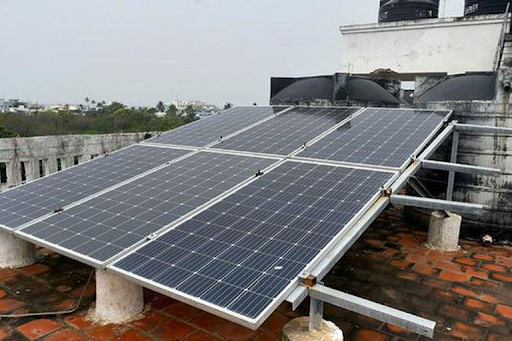
PM Solar Rooftop Programme is a government scheme launched by the Ministry of New and Renewable Energy, Central Government of India, to promote green energy generation and save on electricity bills. The Government extends subsidies on the installation charges of grid-tied rooftop solar panels on houses.
You can get a subsidy on your total cost of grid-connected rooftop solar panel installation. The subsidised solar rooftop scheme will remain valid up to 31st March 2026 or until the government revises the date.
The Government of India launched the programme to minimise the dependence on thermal energy for electricity. It aligns with India’s net-zero target within 2030 (as stated in a Live Mint Report).
The scheme will give a direct benefit to households by helping them save on electricity bills. Plus, they can install on-grid solar panels on their home at a lower subsidised cost.
Following are some key benefits of PM Solar Rooftop Scheme:
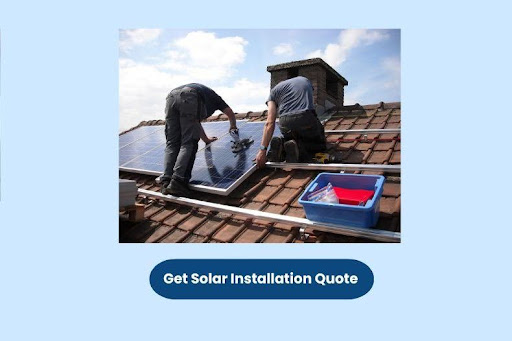
Solar installation by a DISCOM-registered vendor is a must for getting the subsidy. But, which vendor to choose for getting the best deal? Get quotes on rooftop solar system installation through our portal. You will get the best quotations from registered vendors with details on which brand of panels, inverter and other components they use.
Following is the structure of Central Financial Assistance (CFA) or subsidy of the PM Solar Rooftop Scheme for the residential sector:
| Capacity of the Plant | Subsidy Amount on Solar Installation in General States and Union Territories | Subsidy Amount on Solar Installation in Special States and Union Territories** |
| Up to 3KW | Rs.18,000/KW | Rs.20,000/KW |
| Between 3KW and 10KW | Rs.18,000/KW for up to the first 3KW and after that Rs.9,000/KW* | Rs.20,000/KW for up to the first 3KW and after that Rs.10,000/KW** |
*Note: You can get a subsidy for solar panel installation till the capacity is 10KW.
| Capacity of the Plant | Subsidy Amount on Solar Installation in General States and Union Territories | Subsidy Amount on Solar Installation in Special States and Union Territories** |
| Common solar panel capacity for the GHS and RWA up to 500KW* (Cumulative) | Rs.9,000/KW | Rs.10,000/KW |
*Note: Individual homes under the GHS and RWA should have a solar panel capacity of up to 10KW
** Special States and Union Territories: Sikkim, Himachal Pradesh, Uttarakhand, Ladakh, Uts of Jammu & Kashmir, Andaman & Nicobar Islands and Lakshadweep
Capacity-Wise Solar Panel Installation Subsidy 2024 Onwards
Here is a calculated list of the amount you will get as subsidy according to the capacity (calculated as per the new:
| Solar System Capacity | Solar Subsidy in General States and UTs | Solar Subsidy in Special States and Uts* |
| 1 KW | Rs.18,000 | Rs.20,000 |
| 2 KW | Rs.36,000 | Rs.40,000 |
| 3 KW | Rs.54,000 | Rs.60,000 |
| 4 KW | Rs.63,000 | Rs.80,000 |
| 5 KW | Rs.72,000 | Rs.90,000 |
| 6 KW | Rs.81,000 | Rs.1,00,000 |
| 7 KW | Rs.90,000 | Rs.1,10,000 |
| 8 KW | Rs.99,000 | Rs.1,20,000 |
| 9 KW | Rs.1,08,000 | Rs.1,30,000 |
| 10 KW | Rs.1,11,700 | Rs.1,40,000 |
The Central Financial Assistance or CFA for Solar Rooftop Programme is for only the residential sector, not for any Government, commercial, industrial or institutional solar PV installation projects.
You can be the recipient of the subsidy under PM Solar Rooftop if you meet the following criteria:
Proper Installation: You should ensure that the installation of your rooftop solar system is as per the guidance of MNRE.
The Central Government of India launched the National Portal dedicated to the grid-connected solar panel installation, https://www.solarrooftop.gov.in/ in 2022. You can apply for the solar panel installation from this portal. Here are the steps you will have to follow:
Step 1: Portal Registration: Visit the National Portal for Solar Rooftop, click on “Apply for Rooftop Solar”, enter your electricity distribution details, mobile number and email ID to complete your initial registration on the National Solar Rooftop Portal.
Step 2: Application for Installation: Log in to your profile using the passwords and user ID, fill in the application form and submit the filled-in form.
Step 3: Approval and Installation: After getting your application form, your DISCOM will check whether you are eligible for the grid-connected solar panel installation. If it is feasible, you will get an approval for installation. After this, you will need to connect with the DISCOM registered vendor to assess your rooftop and complete installing the rooftop solar system.
Step 4: Application for Net Meter: Upon installing the rooftop solar system, you will need to submit all the necessary details of your solar plant, and apply for a net meter. You will get a net meter free of cost from DISCOM and have to connect it with the solar system and grid with the help of your vendor.
Step 5: Commissioning Certificate Issuance: You will get a commissioning certificate from your DISCOM after they inspect your solar system and net meter connection. A commissioning certificate is one of the essential documents for solar subsidy application.
Step 6: Subsidy Application Form Submission: Log in to your profile on the Solar Rooftop Portal and get the subsidy application form. You will have to submit copies of the commissioning certificate, bank account details and cancelled cheque.
After this, you will get your subsidy on the Grid-connected rooftop solar panel installation directly into your bank account.
Here are the documents you will have to submit while applying for the PM Solar Rooftop Scheme online:
You will have to submit the following documents to get technical feasibility approval for your grid-connected rooftop solar PV installation:
You will have to keep the following documents ready to issue your commissioning certificate after the grid-tied solar PV installation:
You will have to provide the following documents while applying for the subsidy:
In case, you do not have the cancelled cheque, you can submit a copy of your bank account passbook. However, it is necessary that the copy entails the necessary details including, the account holder’s name, name of the bank, IFSC number, account number and branch address.
Follow the steps mentioned below to find your nearby DISCOM vendor:
Step 1: Go to the government portal for rooftop solar panel installation
Step 2: Click on “Empanelled Vendors by DISCOM”
Step 3: Get the list of registered vendors by state
After this, you will get the DISCOM registered vendor in your state.
The PM Rooftop Solar Scheme aims to reduce the financial burden of consumers with subsidised solar panel installation on the rooftop. It cuts your solar installation charge by almost 40%, depending on the subsidy structure of your DISCOM.
So, it is time for you to be a part of the change for a green future with carbon-free solar electricity generation on your free rooftop space. You can save up to 300 units of electricity cost per month after the installation.
Our installation partners will check your requirements and send you quotations within 48h hours.
Your site visit will be scheduled at the provided location. The team will connect for a better experience.