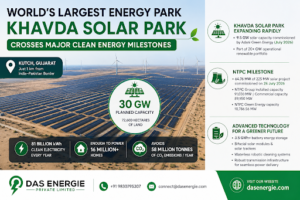
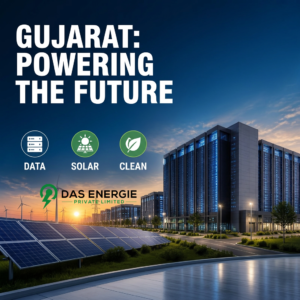
Gujarat’s ambitious data centre policy could become a major catalyst for Gujarat solar power demand. Experts estimate that the state’s push for AI-ready digital infrastructure may require nearly 45 GW of additional solar capacity by FY35.
Gujarat’s newly launched Viksit Gujarat Data Centre Policy 2026-29 is expected to attract Rs 6 trillion in investments and establish 7.5 GW of hyperscale data centre capacity. It will also reduce annual operating costs for eligible projects by around 22%.
The policy targets data centre projects with a minimum capacity of 150 MW and offers several incentives. It includes a Rs 1 per unit electricity subsidy for 20 years, 100% reimbursement of electricity duty, full reimbursement of eligible SGST, and an additional 2.5% capital subsidy for projects established in Dholera. Nuvama estimate that these benefits translate into an effective capital subsidy of approximately 5.2%, which will significantly improve project viability.
A key feature of the policy is its sustainability mandate. Every eligible facility must source at least 51% of its electricity from renewable energy. It will create substantial opportunities for solar power Gujarat projects, battery energy storage systems (BESS), and developers supplying clean electricity to large-scale digital infrastructure.
Nuvama projects India’s installed data centre energy capacity to expand from around 1.5 GW today to 11.5 GW by FY35. Meeting the resulting electricity requirement of nearly 97 billion units annually would require approximately 45 GW of new solar generation capacity and around 63 GW of solar module demand.
The brokerage expects India’s solar electricity demand to grow at a 22% CAGR between FY26 and FY35, with AI data centres and green hydrogen projects accounting for more than half of future solar capacity additions. It added, “We believe policy formalisation and targeted implementation shall boost anchor data centre capacity, forming an ecosystem facilitating future capacities.”
The Gujarat government believes the policy will strengthen the state’s position as India’s leading destination for AI infrastructure. P Bharathi, Secretary of Gujarat’s Department of Science and Technology, said Gujarat is the first state to introduce a dedicated policy specifically designed for green AI data centres, unlike other states that continue to approve projects on a case-by-case basis.
As hyperscale facilities become increasingly power-intensive, Gujarat’s strategy positions green data centres and solar energy as complementary sectors capable of driving the next phase of India’s clean energy transition.
Loading next article...
Our installation partners will check your requirements and send you quotations within 48h hours.
Your site visit will be scheduled at the provided location. The team will connect for a better experience.